
BIOLASE® Diode Laser in Oceanside, CA

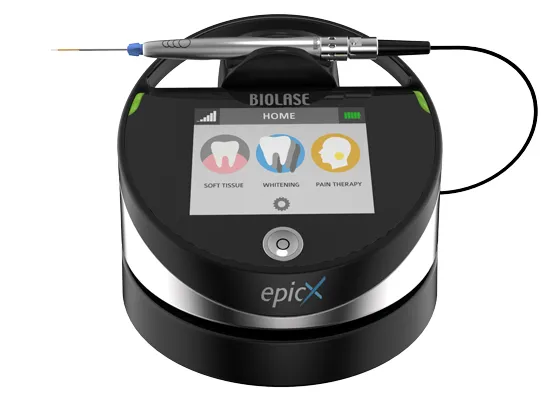
At Mission Family Dentistry, we use the BIOLASE® diode laser to enhance your cleaning appointments with advanced bacterial reduction. This technology targets harmful germs below the gumline and in periodontal pockets, helping promote healthier gums and a cleaner mouth between visits.
How the BIOLASE Diode Laser Works
A diode laser is a focused beam of light energy used to target harmful bacteria below the gumline and in hard-to-reach areas that traditional cleaning instruments may miss. At our office in Oceanside, California, we use the BIOLASE diode laser primarily as a cleaning and decontamination tool during hygiene and periodontal maintenance visits.
The laser emits a specific wavelength that is absorbed by bacteria and infected tissue. This allows our team to reduce the bacterial load in periodontal pockets and around the gumline, helping create a healthier environment for gum tissue to heal and stay healthy between visits.
How BIOLASE Diode Laser Can Help You
- Targeted bacterial reduction in periodontal pockets and along the gumline.
- Enhanced cleaning during routine hygiene appointments for a deeper level of care.
- Reduced inflammation and bleeding in gum tissue after treatment.
- Supports healthier gums between visits by lowering bacterial counts.
- Comfortable experience with minimal sensitivity during and after use.
- Complements scaling and root planing for patients managing gum disease.
- Quick addition to regular cleanings with no extra recovery time needed.
What to Expect During Laser-Assisted Cleaning
Laser-assisted cleaning visits are straightforward and add only a few minutes to your appointment. Here is what to expect:
- Evaluation: Our hygienist checks your gum health, measures pocket depths, and identifies areas that would benefit from laser decontamination.
- Standard cleaning: Scaling and polishing are completed as part of your regular hygiene visit.
- Laser treatment: The BIOLASE diode laser is gently guided along the gumline and into periodontal pockets to eliminate bacteria. You may feel a slight warmth but the process is comfortable for most patients.
- Aftercare: No special recovery is needed. You can eat, drink, and brush normally right after your visit.
Ongoing Benefits
With regular laser-assisted cleanings, many patients notice less bleeding during brushing, reduced gum sensitivity, and improved overall gum health. The laser is especially helpful for patients with a history of gum disease or those who want an extra level of protection during their preventive care routine.
Experience a Deeper Clean
Curious whether laser-assisted cleaning is right for you? Ask at your next visit or call Mission Family Dentistry at 760-439-5515 to schedule with Dr. Odenwalder.
Frequently Asked Questions About Laser-Assisted Cleaning
Laser-assisted cleaning uses the BIOLASE diode laser during your hygiene appointment to reduce bacteria in periodontal pockets and along the gumline. It complements traditional scaling and polishing for a deeper, more thorough clean.
The laser emits a specific wavelength of light that is absorbed by bacteria and infected tissue. This energy eliminates harmful germs in areas that are difficult for traditional instruments to reach, helping to lower the bacterial load below the gumline.
Most patients find laser cleaning very comfortable. You may feel a slight warmth as the laser works, but no anesthesia or numbing is typically needed. The process adds only a few minutes to your regular cleaning visit.
Yes. The diode laser targets bacteria in soft tissue and can be used safely near existing restorations, crowns, and dental implants with proper technique and settings.
Your hygienist will recommend a schedule based on your gum health. Patients managing gum disease or with deeper periodontal pockets may benefit from laser use at every cleaning, while others may use it periodically for added protection.
Patients with gum disease, bleeding gums, or a history of periodontal issues see the most benefit. It is also a great option for anyone who wants an extra level of care during their preventive hygiene visits.